World Usability Day 2016 – The Panel
22 November 2016 - Amy McInnes

A slightly trickier subject for World Usability Day this year did not phase our panel members who once again drew in a large crowd to hear their views on ‘sustainability’ and ‘behaviour change’. The crowd also brought with them some thought provoking questions which certainly made everyone think more about the ethics surrounding behaviour change.
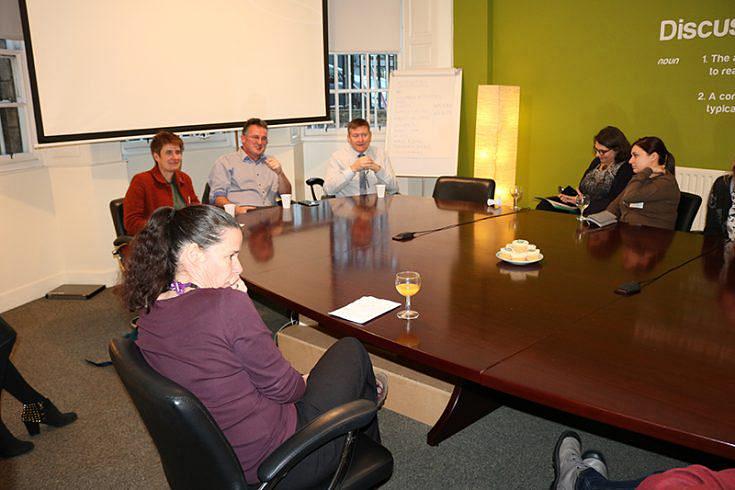
On the panel this year we welcomed:
Ross Tuffee Co-Founder of DOGFI.SH Mobile Ltd who provide Enterprise Mobile Services to clients across the globe. Their work has led them to win various awards, most recently that of ‘best app at Herald Scottish Digital Business Awards(this will open in a new window)’ for their Sugar Smart app(this will open in a new window) they developed for Public Health England. An excellent example of behaviour change.
Gerry McDonald Product Manager at Airwave Application Services (A Motorola Solutions Company) / Kelvin Connect. Kelvin Connect(this will open in a new window) is a subsidiary of Airwave and delivers comprehensive and flexible mobile information solutions to the police and criminal justice, and health and social care sectors. Airwave have created an electronic notebook that has enabled mobile workers such as the police and nurses to access critical information wherever they are (behaviour change in the way they do their jobs). Not only does this mean a better service for the public, but it also means reduced paper (sustainability!).
Teresa Bray Chief Executive of Changeworks(this will open in a new window), a company dedicated to behaviour change around sustainability. The primary goal of Changeworks is to encourage individuals and companies to reduce their impact on the environment. The team at Changeworks have been working closely with householders on how to reduce waste and energy use, and has become Scotland’s most successful recycling service.
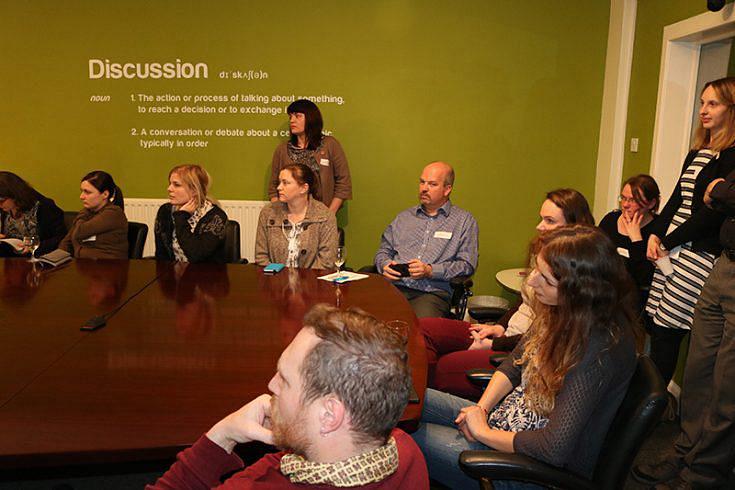
Our key discussion points were around the following questions:
- The impact of sustainability and behaviour change on product/service design
- How do companies involve their audience in their design process?
- Future opportunities for changing behaviours through design
A huge thank you to our panel members and to the audience members for contributing their questions. We’d love to hear your thoughts on these questions? How has your industry tackled them? Where do you see sustainability and/or behaviour change having the biggest impact?
Leave a comment below and join in the discussion.
You might also be interested in...
User Vision is on G-Cloud 15
16 September 2026We're back on G-Cloud 15 with 76 specialist services spanning UX research, service design, accessibility and training - here's what's available and how it can support your 2027 planning.
Read the article: User Vision is on G-Cloud 15Are AI Evaluation Principles Really New?
10 September 2026AI behaves differently from traditional software, but does it need new UX evaluation principles? Largely not. Nielsen's usability heuristics still apply, with trust, transparency and explainability the main additions.
Read the article: Are AI Evaluation Principles Really New?The Unintended Consequences of Making Things Easier
7 September 2026AI scribes save GPs time, but University of Edinburgh research suggests other things change too. Three lessons on behaviour, trust and effort for anyone introducing AI into a service people rely on.
Read the article: The Unintended Consequences of Making Things Easier