A review of Aldi for Internet Retailing
4 October 2016 - Amy McInnes

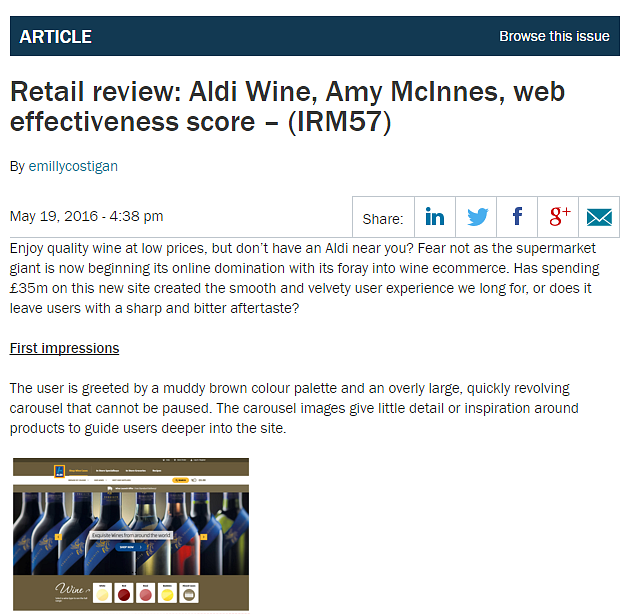
Back in March Aldi launched a new website focusing on wine e-commerce. As part of our monthly contributions to Internet Retailing(this will open in a new window) we provided a high-level review which has just been uploaded.
A short synopsis: Aldi started their foray into e-commerce by supplying wine, by the crate load. The website has the fundamentals we all expect from an e-commerce website these days however, there are certainly areas they could improve upon, such as the uninspiring homepage and limiting page scroll stoppers to the repetition of copy and missing accessibility markup. Aldi do however make it easy enough to sign up and work through their checkout process, keeping the user well informed throughout of what they’re buying, what it’ll cost and the postage options.
Read the full review(this will open in a new window)
You might also be interested in...
Are AI Evaluation Principles Really New?
10 September 2026AI behaves differently from traditional software, but does it need new UX evaluation principles? Largely not. Nielsen's usability heuristics still apply, with trust, transparency and explainability the main additions.
Read the article: Are AI Evaluation Principles Really New?The Unintended Consequences of Making Things Easier
7 September 2026AI scribes save GPs time, but University of Edinburgh research suggests other things change too. Three lessons on behaviour, trust and effort for anyone introducing AI into a service people rely on.
Read the article: The Unintended Consequences of Making Things EasierBanned by the Algorithm: Why "Appeal Later" Isn't Trustworthy AI
20 August 2026Vinted’s automated account bans may be intended to protect users, but when decisions are opaque, explanations are vague and appeals come only after the damage is done, the problem is more than technical. This article explores why AI-driven enforcement is fundamentally a process design issue—and what platforms can do to make automated decisions more transparent, fair and trustworthy.
Read the article: Banned by the Algorithm: Why "Appeal Later" Isn't Trustworthy AI