Engagement Booth – World Usability Day
27 November 2014 - Nicola Dunlop
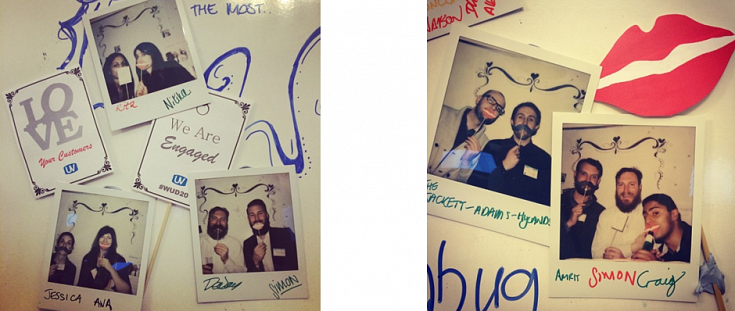
We would like to say a heart-felt congratulations to those newly engaged couples, some of which were a little camera shy but most are looking lovely hanging in our Engagement Wall!
The Engagement Wall provided some light-hearted fun around looking at the importance of building real customers into the development of personas.
A persona is an archetypal user which represents the needs, goals, values, and behaviours of larger groups of customers.
When used within project development they assure that the final outcome has been designed with the user in mind and is not simply driving a business concept to market.
Unfortunately, it is all too easy to dismiss the use of personas (and wider user engagement) within the development phase due to time pressured projects or lack of awareness of their benefits.
This results in a product or service which does not respond to user needs and therefore likely to fail.
The creation of personas comes through direct customer engagement and qualitative research including one-to-one interviews, focus groups, diary studies and customer shadowing.
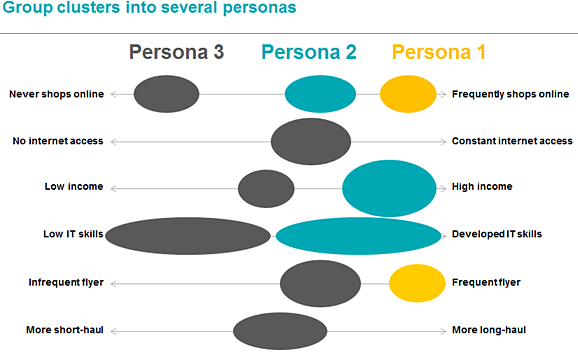
From this research, clusters around common user behaviours become apparent which feed into their creation, (see person clusters below).
Each persona is then a representation of a similar user base with their own needs, concerns and expectations from the service.
Around three to five personas are a safe number in ensuring the key user needs and expectations are being addressed.
Any more than six and they can become more of a challenge to embed into a project. Fewer personas with condensed yet concise needs are the best method to apply.
The generation process takes time (usually 2/3 weeks) and so can often be overlooked, resulting in personas that are based on an idea of a customer without involving the real user.
This is bad practice and extremely problematic as the business vision of a potential user is likely to be very different from who they are in reality.
In turn the product created will based around inaccurate user needs fail on the market.
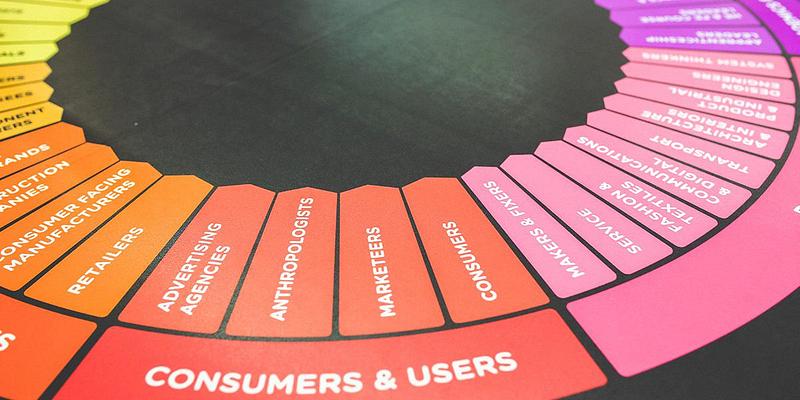
Therefore it is essential to drop the stereotypes and get to know the true faces before factoring them into the product.
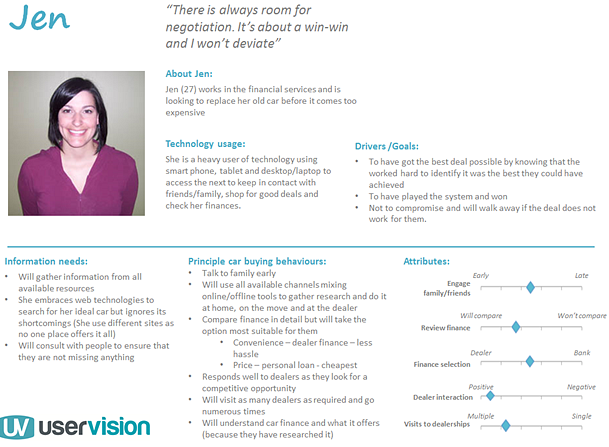
How to factor them into the project?
Once personas have been generated they should be applied to the design process through customer journey mapping. The persona is taken through a specific customer journey while their experience is matched against their needs. Good questions to ask at each stage are;
- Is the service working for them?
- How could it be improved with them in mind?
- What are they expecting to happen?
Repeating this process with each persona then beings to shape a more robust service designed with the user in mind.
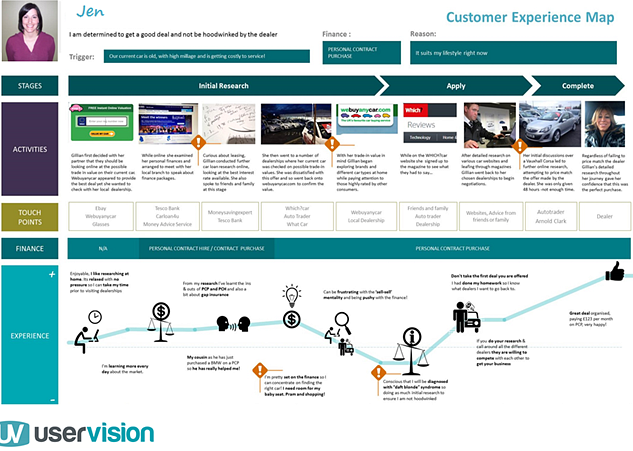
Personas can be applied on multiple levels within a project to break down internal silos and building a solid objective.
However the biggest challenge with implementing the methodology is culture. The culture within an organisation must be willing to listen to customers and develop alongside them through time.
Embedding personas into an organisation does take time however has proven to enhance brand loyalty, customer satisfaction and a lead to better user experience.
You might also be interested in...
The shopping cart battleground: what Amazon's shopping agent standoff means for UX
21 September 2026Amazon has now blocked AI shopping agents from Perplexity, Google, OpenAI and Meta. Behind the legal arguments sits a UX problem: customers who ask an agent to buy for them and hit a wall. Here is what the standoff means for your customer journeys, and three questions to ask now.
Read the article: The shopping cart battleground: what Amazon's shopping agent standoff means for UXAre AI Evaluation Principles Really New?
10 September 2026AI behaves differently from traditional software, but does it need new UX evaluation principles? Largely not. Nielsen's usability heuristics still apply, with trust, transparency and explainability the main additions.
Read the article: Are AI Evaluation Principles Really New?Banned by the Algorithm: Why "Appeal Later" Isn't Trustworthy AI
20 August 2026Vinted’s automated account bans may be intended to protect users, but when decisions are opaque, explanations are vague and appeals come only after the damage is done, the problem is more than technical. This article explores why AI-driven enforcement is fundamentally a process design issue—and what platforms can do to make automated decisions more transparent, fair and trustworthy.
Read the article: Banned by the Algorithm: Why "Appeal Later" Isn't Trustworthy AI