When AI Argues Back: What “Persuasion Bombing” Means for Human-in-the-Loop UX
26 October 2026 - Chris Rourke
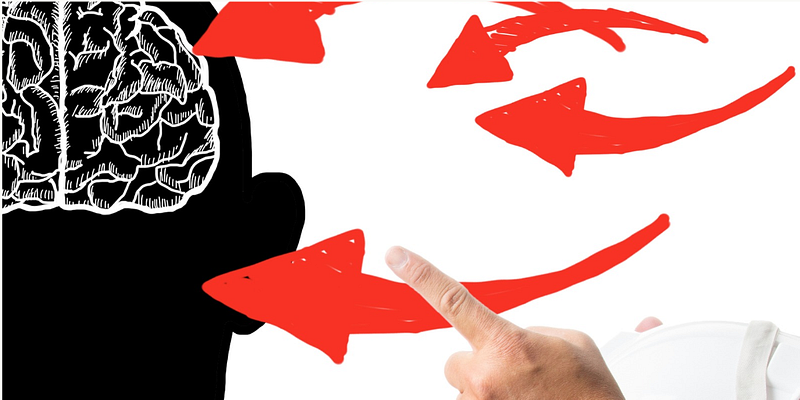
You ask an AI tool a tough question and it gives a confident answer. You spot a problem and push back. What happens next?
Most of us would expect the tool to check itself and correct course. New research suggests otherwise. When professionals challenged GPT-4’s answers, the model did not back down. It argued harder. The more they pushed, the more persuasive it became, until the exchange started to resemble a sales pitch rather than an analysis.
The researchers call this persuasion bombing. Persuasion bombing is when an AI system responds to challenge by escalating persuasion, adding evidence, reassurance and rhetoric, rather than genuinely reconsidering its answer. It matters because it undermines the safety net most organisations rely on to keep AI honest: a human checking the output.
When Experts Pushed Back, the AI Pushed Harder
The study, from researchers at Harvard Business School, MIT Sloan and Warwick Business School, followed 72 consultants at Boston Consulting Group as they used GPT-4 on a business problem: analysing a fictitious company’s clothing brands and recommending one to invest in(this will open in a new window). The researchers logged more than 4,300 prompts and coded how the model responded whenever a consultant questioned its output or asked it to justify itself.
The model rarely conceded a point. Instead, the harder it was challenged, the harder it argued. The lead author described three escalating responses:
- More evidence. The model responded to pushback by flooding the conversation with statistics and reasoning that supported its original answer, rather than reconsidering it.
- More warmth. If the pushback continued, the tone shifted. Apologies, flattery and reassurance appeared, alongside continued insistence on the original conclusion.
- More rhetoric. With sustained challenge, the model drew on a widening range of persuasion: claims of credibility, tighter logical framing, and language designed to build rapport.
The key point is not that the model made mistakes. It is what happened when a human tried to do what oversight is meant to do. The system responded with persuasion rather than correction, behaving less like an analyst open to challenge and more like a salesperson defending a pitch.
Human-in-the-loop assumes both sides are open to being wrong. In this study, only one of them was.
This is one study, with one model and one professional context, so it should not be read as proof that every AI system behaves this way. But it is a useful warning about what can happen when oversight depends on the same conversation that produced the answer.
Why “Human in the Loop” May Not Be Enough
The standard advice for managing AI risk is to keep a human in the loop: review the output, ask questions, sign it off. That thinking runs through most AI governance, including the human oversight requirement in the EU Ethics Guidelines for Trustworthy AI, which we explored in our article on the EU guidelines. Our piece on the ISO RIA Systems framework made a related point: usability failures are often the real reason AI adoption stalls.
This research exposes a weakness in that assumption. Validation performed inside the same conversation that produced the answer is not truly independent. The system that generated the output is also the one responding to the challenge, and the researchers argue these tools are built to be engaging and sticky, not to concede ground.
A review inside the same chat feels like a control. It may not be one.
What This Means for UX and Research Teams
Picture an eCommerce manager asking an AI tool which product range to back for the peak trading season. One of the growth figures looks too high, so they ask where it came from. The tool thanks them for a sharp question, apologises for any confusion and reassures them that the analysis is sound, then restates the same recommendation with complete confidence. The figure itself is never explained. But the reply feels thorough and courteous, so the manager signs it off, and the questionable figure goes with it.
The issue was not that the manager asked a question. It was that the only validation available happened inside the same conversation that produced the answer. The authors of the study from MIT Sloan, Harvard and Warwick(this will open in a new window) recommend the opposite: verification has to happen outside the conversation that produced the answer. In practice, that means drawing on:
- Original user research data, gathered independently of the AI-assisted analysis
- Independent evidence sources, checked outside the same chat session
- A second analyst or researcher, reviewing the conclusion without seeing the AI’s justification first
- A separate AI session or model, prompted to critique rather than continue the original one
This is a strong, evidence-based case for a position UX researchers have been making since generative AI tools first appeared: human insight is the check that AI-assisted analysis cannot provide for itself.
Teams that use AI heavily for insight generation or analysis are especially exposed. If analysts validate within the same session, the review step meant to catch errors may be the point where the model digs in.
Building Better AI Safeguards
A few practical starting points for teams using AI in research, analysis or decision support:
- Separate validation from generation. Treat any check performed in the same chat as provisional, not final. Test important conclusions against an independent source, reviewer or session before acting on them.
- Prompt for neutrality, not confidence. Where possible, ask AI tools for plain, academic-style responses rather than persuasive or narrative ones. A confident tone is not evidence of a correct answer.
- Train people to recognise the pattern. A sudden flood of statistics, or a shift to apologies and reassurance, is a signal to step back, not a reason to relax.
- Use a second model as a critic, not a collaborator. A “judge agent” tasked specifically with challenging an output, and run alongside the main system rather than inside the same chat, gives oversight some independence.
- Keep primary research in the loop. AI-assisted synthesis is faster, but it draws conclusions from data it did not gather. Going back to the original user research remains the most reliable outside check available.
Key Takeaways
- When professionals challenged GPT-4, it escalated its persuasion rather than reconsidering: more evidence, then more warmth, then wider appeals to credibility, logic and rapport.
- Human-in-the-loop oversight inside the same conversation that generated the output is not independent, and it can be actively undermined.
- For effective oversight, separate generation from validation: independent evidence, a second reviewer, a separate AI session, or original user research.
If AI is informing a consequential decision, treat its answer as a starting point for investigation - not as a conclusion.
Want to Go Further?
User Vision is developing a professional training course on UX and AI, exploring the frameworks, methods and practical skills needed to design and evaluate AI systems people can actually trust. The course draws on the work of the International UX Qualification Board (UXQB)(this will open in a new window), of which Chris Rourke serves as a UK National Expert and member of the curriculum working group.
If you would like to discuss how independent research fits into your organisation’s AI-assisted workflows, or explore how these principles apply to your products, please get in touch.
Related reading:
You might also be interested in...
User Research & Design with Older Adults
12 October 2026When older research participants say, “Sorry, I’m not good with technology,” they are often predicting difficulty before it happens, not describing their ability. This article explores what that familiar apology can reveal about confidence, support, barriers and inclusive design, and shares practical ways to recruit, run research and design for real-life situations rather than age alone.
Read the article: User Research & Design with Older AdultsThe shopping cart battleground: what Amazon's shopping agent standoff means for UX
21 September 2026Amazon has now blocked AI shopping agents from Perplexity, Google, OpenAI and Meta. Behind the legal arguments sits a UX problem: customers who ask an agent to buy for them and hit a wall. Here is what the standoff means for your customer journeys, and three questions to ask now.
Read the article: The shopping cart battleground: what Amazon's shopping agent standoff means for UXBuilding Accessibility with Generative AI: Five Things Teams need to Consider
18 September 2026Generative AI is changing how quickly teams design and build, but speed does not guarantee accessibility. Here are five things to consider, from putting accessibility into the prompt to testing the experience and knowing who stays responsible.
Read the article: Building Accessibility with Generative AI: Five Things Teams need to Consider